
How much does your home really cost?
A real-world case study showing how better buildings cost less to own
By: Lorrie Rand
The best house that we can build costs less to own than the worst house we can build. For most of us our homes are our biggest expense in life, so it is critical that we make informed decisions about our investment. When building or renovating your home it is easy to fixate on construction costs, but owning a house means taxes, insurance, mortgage interest, utilities, maintenance and repairs, all of which increase over time due to inflation. Currently the home building industry is focused on energy efficiency, which is very important, but energy efficiency alone does not guarantee a low cost of home ownership.
To demonstrate this, let’s look at the long term impacts of the same design built four ways. The following example is based on a recent Habit Studio project, built in rural Nova Scotia. It is a two storey design of about 2700 square feet total floor area. To understand the lifetime financial impacts of possible design options we worked with Jim Nostedt of SEEFAR Building Analytics.
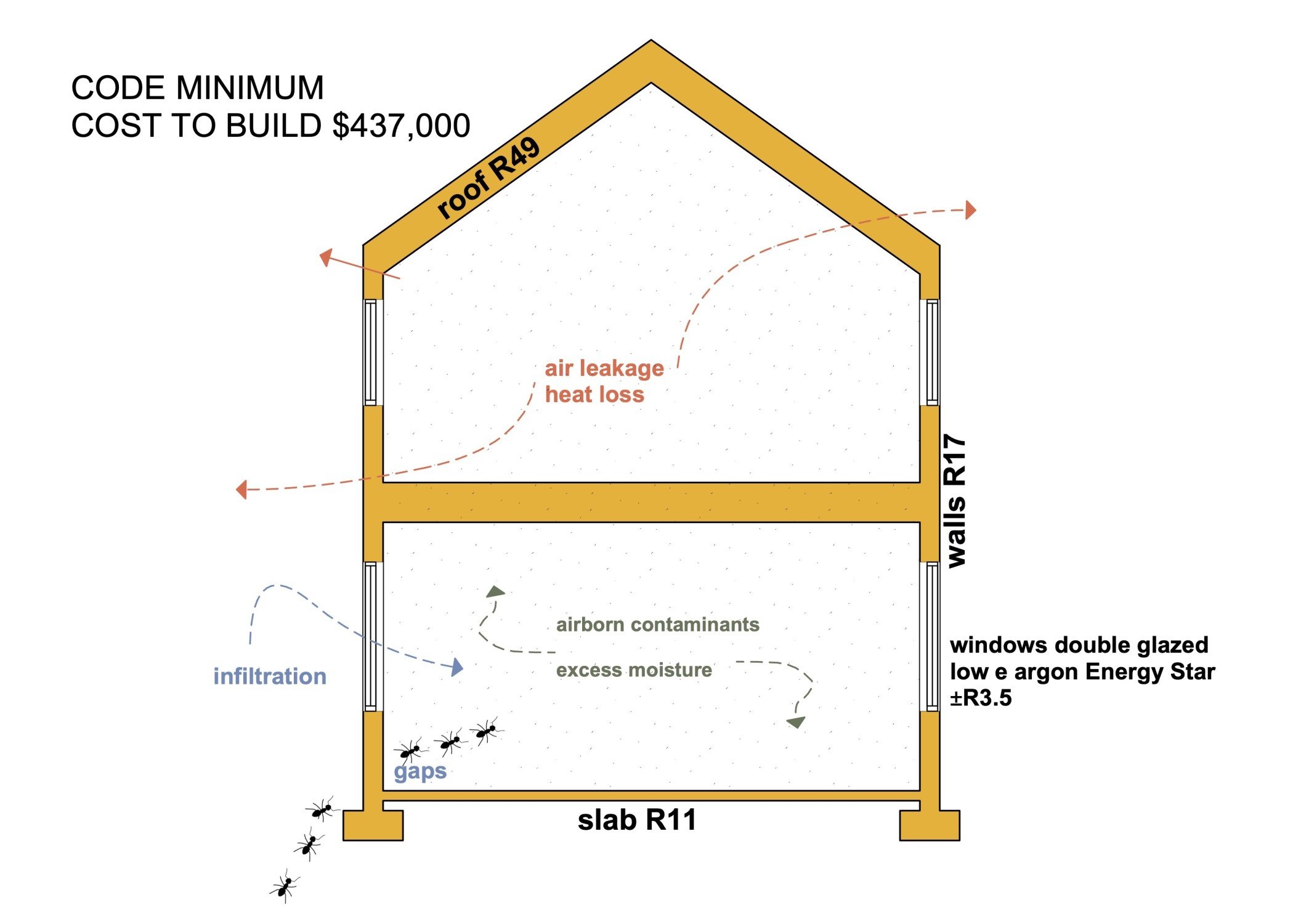
High performance targets were planned for the project from the first meeting with the owners, however the economic model starts with building code minimum as a base case for comparison. Compliance with the National Building Code ensures a structurally safe building that meets minimally acceptable levels of energy efficiency. Houses built in Nova Scotia today are warmer and healthier than ever, but a code minimum house is still the worst house we can build. A code house can still fall short in terms of comfort and they can cost a lot to heat and maintain.
At Habit Studio we want our clients to live in the highest quality homes possible, which means a Passive House. A Passive House is a designed using physics to ensure quality, health, comfort and to maximize energy efficiency. The fundamental move in a Passive House is to upgrade the envelope so that reliance on mechanical components is minimal.
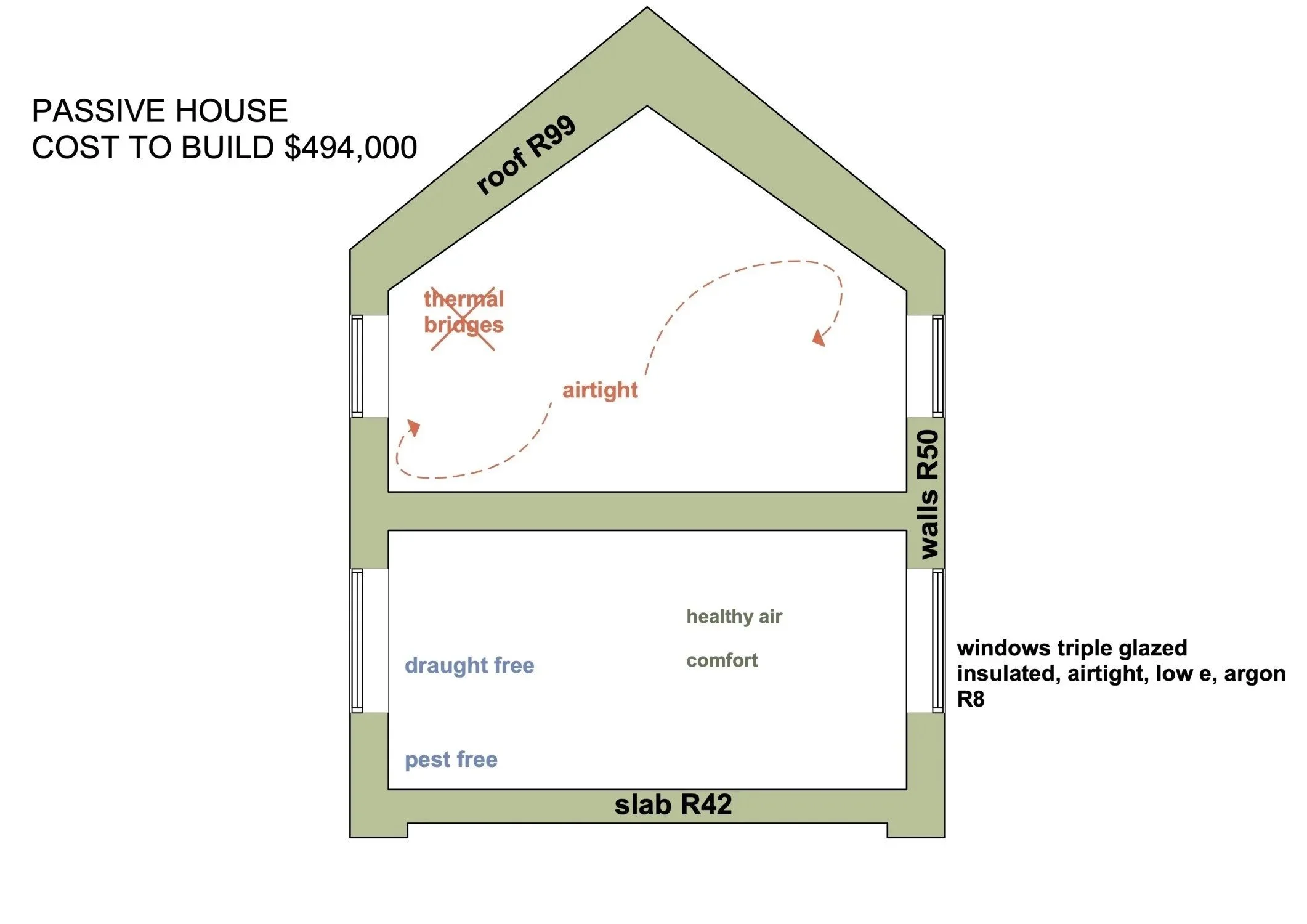
For this case study we asked our experienced Passive House builder to price the project as both a code minimum build and Passive House. Depending on your location, a Passive House can come at a premium, and for this project it cost 13% more to build.
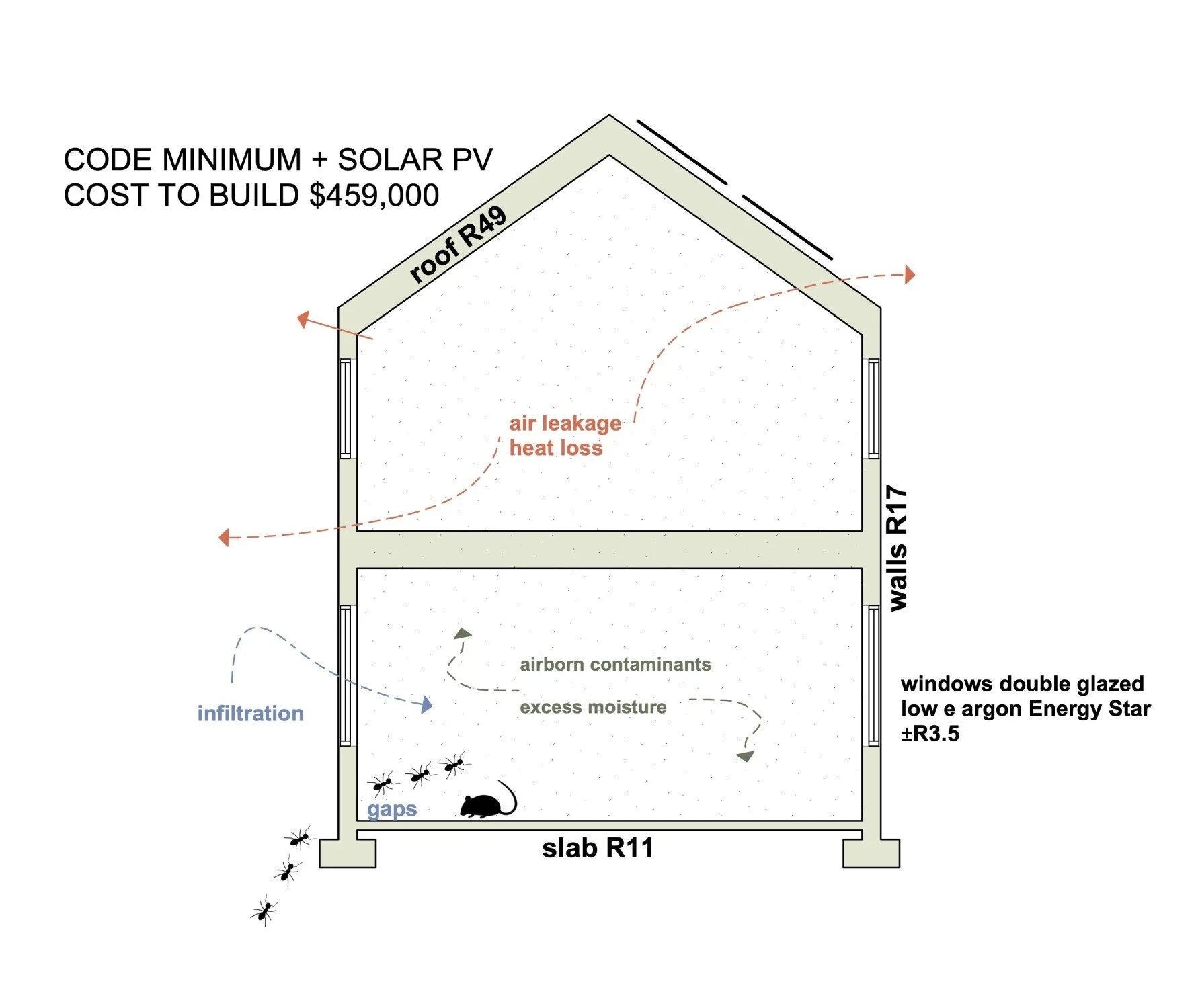
A common scenario is to build a code compliant home with solar panels, which are affordable and incentivized in Nova Scotia. This is a cheaper alternative to Passive House, and reduces operating costs in the short term, however adding a solar array increases the reliance on mechanicals. Over time the costs associated with maintaining and replacing mechanical components surpasses energy savings generated by solar panels.
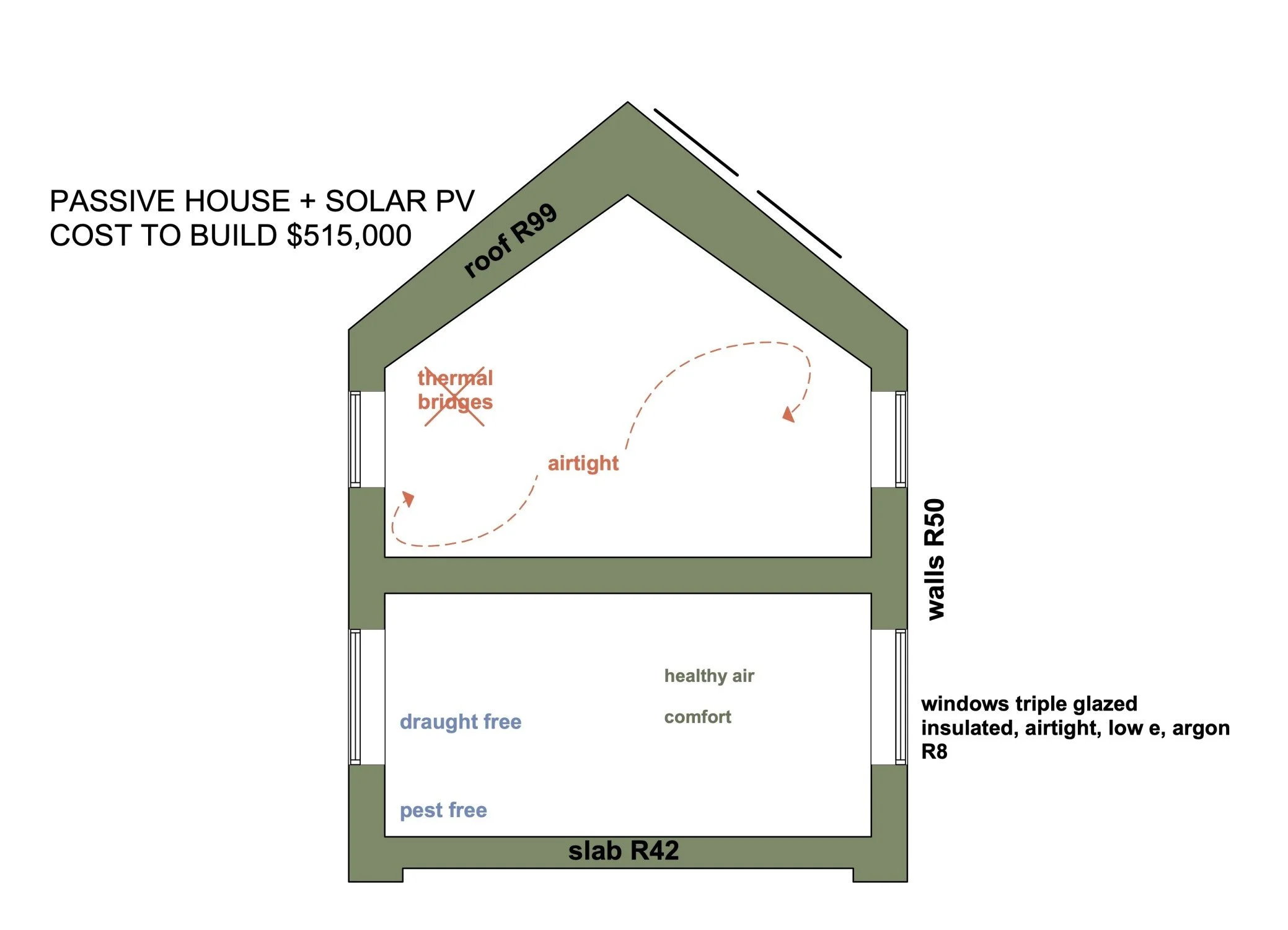
Finally we looked at building a Passive House plus solar panels. This is effectively a Net Zero home.
The case study results depend significantly on the assumptions made about energy costs, inflation and the life expectancy of various components. It is not a crystal ball, but the SEEFAR model is comprehensive in including all of the major expenses related to home ownership. We chose to make conservative assumptions related to inflation, so the projections assume, for example, smaller hikes in the cost of electricity in Nova Scotia than we have experienced in recent years and slow escalation in the value of their property. Complete accuracy in terms of total costs is not the goal of this exercise, what is important is to understand the relative costs between the options, so that our clients could make carefully considered decisions about their home.
The SEEFAR model highlights costs at three specific times: 12 years, the average number of years home owners live in a particular home, 27 years, the end of the mortgage term (allowing 2 years for build time), and 60 years, which is considered the useful life of the home before a major renovation would be done. While no single owner is likely to live in a house for 60 years, as designers it is important to understand this math in order to for our projects to be financially and environmentally sustainable.
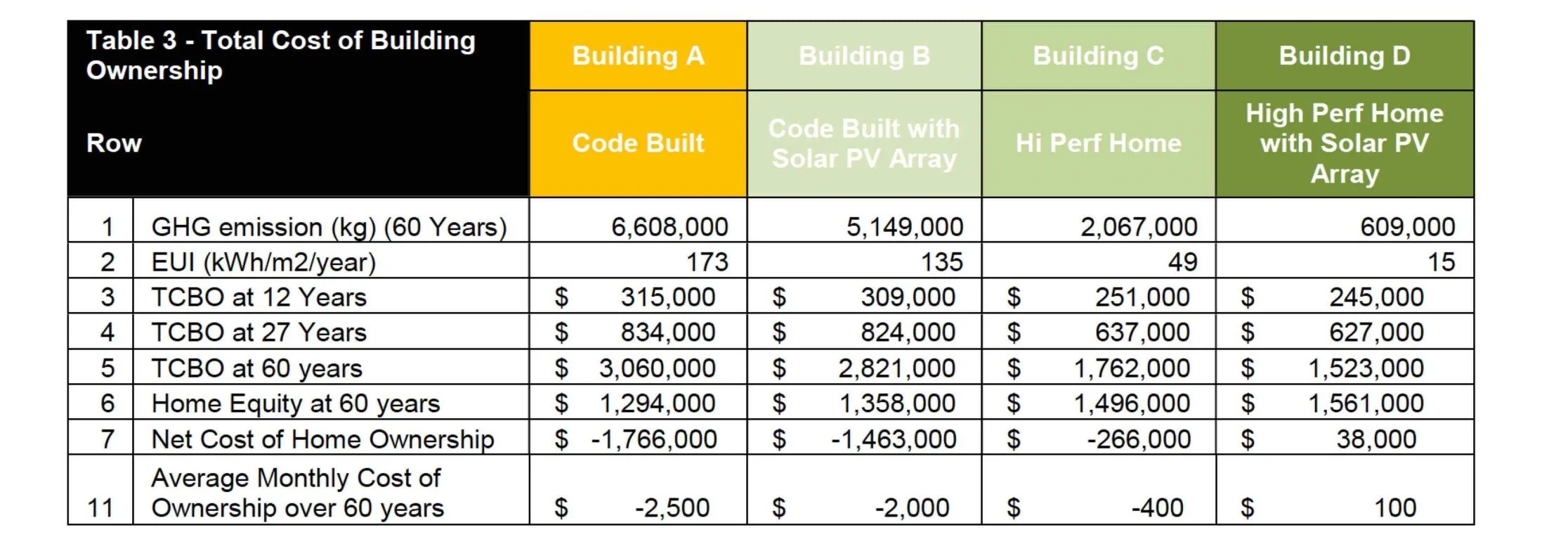
For our clients this is their forever home and they are seeking the best longterm financial scenario, but even if they only live there for 12 years they are clearly better off in investing in a higher performance house. So where exactly the money is going? The graph below shows the total costs at 60 years.
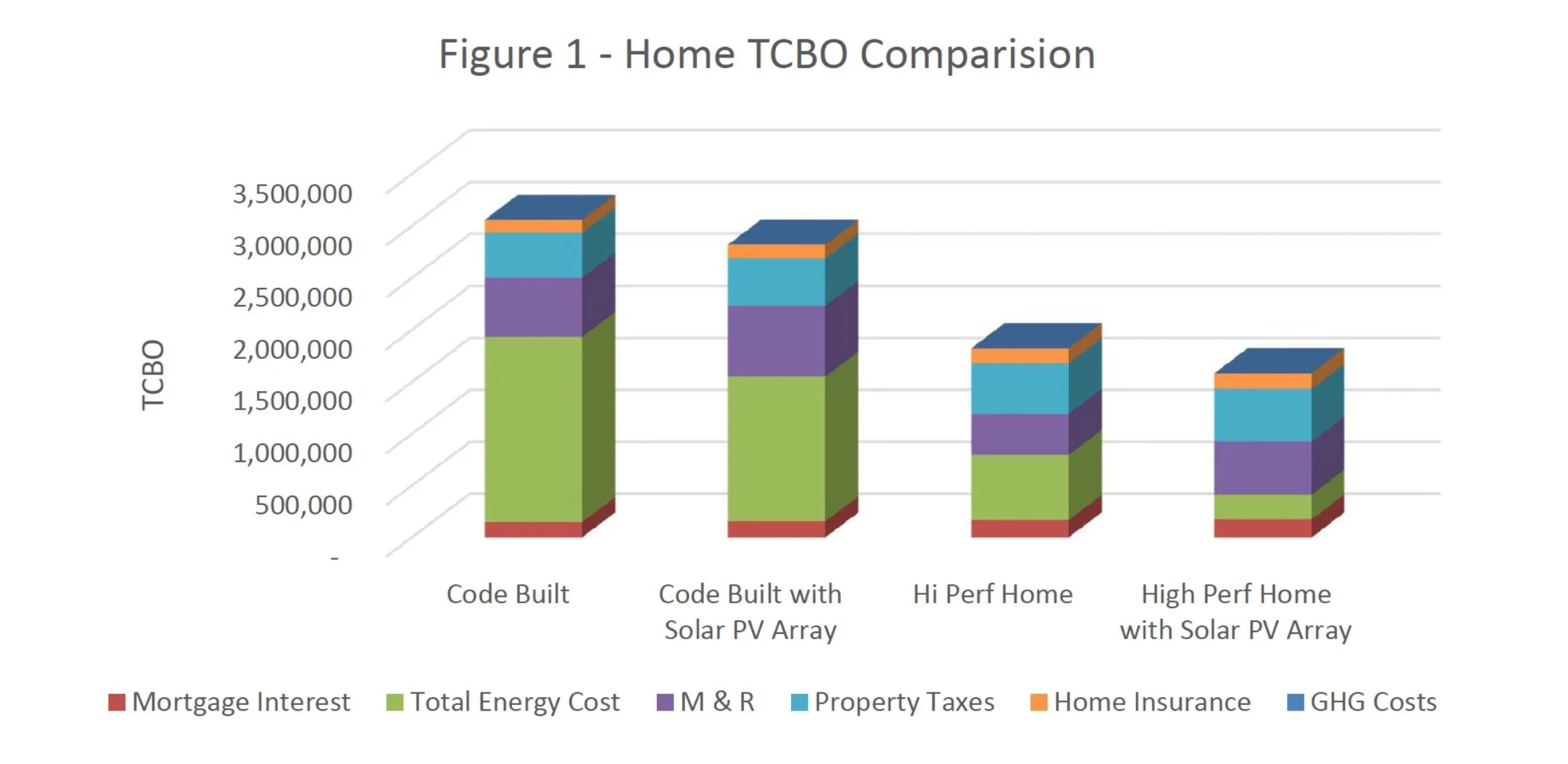
In the code minimum house energy bills account for more than half of the total cost of home ownership. This is also the case with the code minimum house with solar panels. In order to take the code minimum house to Net Zero performance the house would need a roof at least three times larger. The most impactful option is to build a Passive House. The addition of solar panels to the Passive House reduces the total costs over just building a Passive House, but the added maintenance of the solar array offsets the energy savings by a fair amount, so installing panels is not as beneficial as we might expect if we only look at energy use.
In the end our clients chose option four and are looking forward to many years in their Net Zero home. If you are interested in more information about building houses that are both economically and environmentally sustainable please comment below or send me a note.